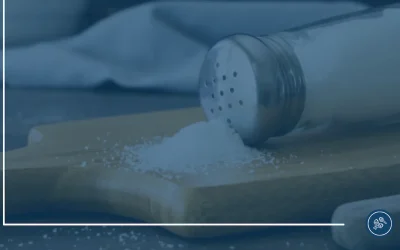
Yes. Salt and sea salt can be used in USDA organic food products, but salt itself cannot be certified organic.
Manufacturers must still verify that the salt does not contain prohibited additives and that its complete formulation is acceptable to the product’s organic certifying agent.
Not every commercial salt is automatically appropriate for an organic-labeled product. Anti-caking agents, free-flow agents, whiteners, iodizing agents, stabilizers, and other additives may affect whether a particular salt can be used.
Understanding these requirements early can help manufacturers avoid certification delays, reformulation costs, and commercialization challenges.
Why Can’t Salt Be Certified Organic?
Organic certification applies to agricultural products produced according to USDA organic standards.
Salt is a naturally occurring mineral, not an agricultural product. Therefore, the salt itself cannot be certified organic.
A finished food may still contain salt and qualify for an organic labeling claim. The important question is not whether the salt is organic. It is whether the salt and everything added to it are permitted for the product’s intended organic labeling category.
According to the USDA’s guidance on salt in organic food, salt and sea salt may be used in organic products when they do not contain prohibited additives.
What Makes Salt Acceptable for an Organic Product?
Salt and sea salt are generally permitted in organic products when they do not contain prohibited additives.
Manufacturers should evaluate the complete ingredient specification rather than relying only on a product name, supplier description, or general statement that the salt is “natural.”
Several factors should be reviewed before approving a salt for use.
Review Anti-Caking and Free-Flow Agents
Commercial salts may include anti-caking or free-flow agents that prevent clumping and improve handling during storage and production.
However, USDA guidance identifies several common anti-caking, free-flow, and whitening agents that are generally not allowed in products labeled “organic” or “100 percent organic.”
Examples include:
- Calcium silicate
- Ferric ammonium citrate
- Sodium ferrocyanide
- Magnesium silicate
- Magnesium carbonate
- Propylene glycol
- Aluminum calcium silicate
- Sodium aluminosilicate
Manufacturers may need to obtain a complete composition statement from the salt supplier confirming whether any of these substances or other additives are present.
USDA guidance provides a limited exception for magnesium carbonate. Salt containing magnesium carbonate may be used in products labeled “made with organic ingredients,” but it may not be used in products labeled “organic” or “100 percent organic.”
Manufacturers should also review the USDA’s National List of Allowed and Prohibited Substances and confirm the final determination with their organic certifying agent.
Obtain Complete Supplier Documentation
Before approving a salt, manufacturers may need documentation identifying:
- The salt’s complete composition
- Anti-caking or free-flow agents
- Whiteners
- Iodizing agents
- Stabilizers
- Processing aids
- Other added substances
- Relevant supplier statements or certifications
Collecting this information early allows the manufacturer and certifying agent to evaluate the ingredient before it creates a problem later in product development.
Do You Need Help Formulating an Organic Label?
Can Iodized Salt Be Used in an Organic Product?
Iodized salt may be used in an organic product, but the complete formulation must be submitted to the organic certifying agent for review and approval.
Iodized salt typically contains:
- Salt
- An iodizing agent
- A stabilizer for the iodine
Each component should be evaluated rather than assuming the entire ingredient is acceptable based only on the salt specification.
Because formulations vary among suppliers, manufacturers should verify the exact iodizing agent, stabilizer, and any additional processing aids used.
Does Salt Count Toward the Percentage of Organic Ingredients?
No. Salt and water added during formulation are excluded when calculating the percentage of organic ingredients in a finished product.
However, that exclusion does not mean salt can be omitted from the ingredient statement or certification documentation.
Salt must still be included in:
- Ingredient lists
- Ingredient profiles
- The product’s organic system plan
- Documentation submitted to the certifying agent
The USDA recognizes several organic labeling categories:
- 100 percent organic: The product contains only certified organic ingredients, excluding salt and water from the calculation.
- Organic: At least 95 percent of the calculated ingredients are certified organic, excluding salt and water.
- Made with organic ingredients: At least 70 percent of the calculated ingredients are certified organic, excluding salt and water.
- Specific organic ingredient identification: Products below the 70 percent threshold may identify qualifying organic ingredients without representing the finished product as organic.
Each category has different composition, documentation, and labeling requirements.
Organic product labels must also be reviewed and approved by a USDA-accredited certifying agent before they are used in the marketplace.
Organic Acceptance Does Not Cover Every Label Claim
An ingredient that is acceptable for an organic product does not automatically satisfy every other certification or marketing claim.
Kosher
The term “kosher salt” commonly describes a salt’s crystal size and culinary use.
That does not necessarily mean the ingredient has been reviewed and certified by a recognized kosher certification organization.
Non-GMO
Salt is a mineral and is not genetically modified.
However, additives, carriers, stabilizers, and processing aids in a commercial salt product may still need to be evaluated under the manufacturer’s selected non-GMO standard.
Clean Label or Natural
Clean-label and natural positioning are not interchangeable with USDA organic certification.
A manufacturer may prefer a minimally formulated salt without anti-caking agents because it supports a simpler ingredient statement. However, that ingredient must still meet the product’s performance, customer, retailer, regulatory, and certification requirements.
Manufacturers pursuing these claims can also review JRW’s clean-label ingredient solutions.
The right salt depends on both the claims being made and the way the ingredient must function during production.
Want to Check if Your Ingredients Match Your Label Claims?
Why Salt Selection Matters
Salt selection affects much more than flavor.
The wrong ingredient specification can influence:
- Organic certification
- Ingredient-statement accuracy
- Customer and retailer requirements
- Product functionality
- Manufacturing consistency
- Commercialization timelines
- Reformulation and testing costs
A salt may perform well in production but create documentation or certification concerns.
Conversely, an ingredient that supports the intended label claim must also deliver the particle size, solubility, distribution, flavor, and processing performance required by the application.
Manufacturers must evaluate certification and functionality together.
How Technical Ingredient Support Reduces Risk
Ingredient decisions become increasingly complex when manufacturers are balancing certification, functionality, cost, availability, and production performance.
John R. White’s Technical Services Team works with food manufacturers to:
- Review ingredient specifications and supporting documentation
- Evaluate functional and formulation requirements
- Identify alternative ingredients
- Coordinate with ingredient manufacturers
- Support formulation and plant testing
- Address sourcing and commercialization challenges
The goal is not simply to locate an ingredient. It is to identify a solution that supports the product’s performance, documentation, supply requirements, and path to commercialization.
JRW works across a variety of food manufacturing markets, allowing its team to consider ingredient selection in the context of real-world applications, processing demands, and operational requirements.
Do You Need Help Formulating an Organic Label?
Frequently Asked Questions About Salt in Organic Products
Can salt be certified organic?
No. Salt is a mineral rather than an agricultural product, so the salt itself cannot be certified organic.
It may still be used in an organic product when it meets USDA requirements and is accepted by the product’s organic certifying agent.
Can sea salt be used in organic food?
Yes. USDA guidance treats sea salt and traditional salt the same for organic-product purposes.
Both may be used when they do not contain prohibited additives.
Are anti-caking agents allowed in salt used in organic food?
Many common anti-caking and free-flow agents are generally not allowed in products labeled “organic” or “100 percent organic.”
The complete salt formulation should be reviewed with the product’s organic certifying agent.
Can iodized salt be used in an organic product?
Potentially.
The iodizing agent, stabilizer, and any other components must be submitted to the certifying agent for review and approval.
Does salt count toward the 95 percent organic requirement?
No. Salt and water are excluded from the percentage calculation.
Salt must still be disclosed in the ingredient documentation and organic system plan.
Who makes the final decision about whether a salt is acceptable?
The product manufacturer’s USDA-accredited organic certifying agent makes the final determination.
Manufacturers should submit the complete ingredient specification and supporting supplier documentation for review.
Partner With Experts Who Understand Food Ingredients
Successful organic products begin with informed ingredient decisions.
John R. White helps food manufacturers evaluate ingredient functionality, supplier documentation, formulation requirements, and commercialization risks.
Whether you are developing an organic product, simplifying an ingredient statement, or evaluating an alternative salt, early technical review can help prevent costly problems later.
Contact John R. White’s Technical Services Team to discuss your next formulation or ingredient challenge.
Contact our team today